
Best Supplements for Arthritis Relief in 2026: Evidence-Based Solutions for Joint Pain
Frequently Asked Questions
What are the most effective supplements for arthritis relief?
The most well-researched supplements for arthritis include glucosamine and chondroitin for cartilage support, omega-3 fatty acids for reducing inflammation, and curcumin (from turmeric) for its potent anti-inflammatory properties. Boswellia and collagen peptides also show promising evidence for improving joint pain and function.
Is there scientific evidence that turmeric helps arthritis?
Yes, multiple clinical studies have shown that curcumin, the active compound in turmeric, can significantly reduce joint inflammation and pain scores in patients with osteoarthritis and rheumatoid arthritis. It works by inhibiting inflammatory pathways similar to NSAIDs, but with a gentler side-effect profile.
How do omega-3 fatty acids help with joint pain?
Omega-3s found in fish oil help suppress the production of inflammatory cytokines and enzymes that drive joint inflammation in arthritis. Regular supplementation has been associated with reduced morning stiffness, decreased joint swelling, and lower reliance on anti-inflammatory medications.
How long should I take joint supplements before seeing results?
Most evidence suggests that joint supplements require consistent use for at least 8–12 weeks before significant symptom relief becomes apparent, as they work by gradually addressing underlying inflammation and supporting tissue repair. Short-term trials often underestimate their effectiveness.
Can I take multiple arthritis supplements together?
Many arthritis supplements can be safely combined, and certain combinations—such as glucosamine with chondroitin, or turmeric with omega-3s—may provide complementary benefits. Always consult your healthcare provider before stacking supplements, particularly if you take blood thinners or other prescription drugs.
📚 Related Articles on Arthritis & Joint Pain
This article is for informational purposes only. Always consult a qualified healthcare professional before starting any supplement or treatment.
This article contains affiliate links. We may earn a commission at no extra cost to you.
📋 Quick Summary
Living with arthritis doesn’t mean accepting constant pain. In this comprehensive 2026 guide, we examine the latest clinical evidence on natural supplements for arthritis relief. Key findings:
– Glucosamine and chondroitin can reduce joint pain by 20-30% in osteoarthritis patients
– Curcumin shows anti-inflammatory effects comparable to ibuprofen
– Omega-3 fatty acids decrease joint stiffness and may reduce NSAID dependency
– JointVive emerges as a top clinical-grade option combining multiple proven ingredients
– Lifestyle modifications significantly enhance supplement effectiveness
Whether you’re looking to complement conventional treatments or seeking natural alternatives to NSAIDs, this guide provides everything you need to make an informed decision.
Understanding Arthritis and Joint Pain: What Science Says in 2026
If you’re waking up with stiff, aching joints or finding it harder to do things you once took for granted—like opening jars or climbing stairs—you’re far from alone. According to the latest CDC 2026 data, over 58.5 million U.S. adults have doctor-diagnosed arthritis, making it one of the leading causes of disability in America.
But what exactly is happening inside your joints?
Arthritis isn’t a single disease. It’s an umbrella term covering more than 100 different conditions that affect the joints and surrounding tissues. The two most common types are:
Osteoarthritis (OA)
Often called “wear and tear” arthritis, osteoarthritis occurs when the protective cartilage cushioning the ends of your bones gradually breaks down over time. Without this cushioning, bones can rub against each other, causing pain, swelling, and reduced mobility. Risk factors include age, previous joint injuries, obesity, and genetics.
Rheumatoid Arthritis (RA)
Unlike osteoarthritis, rheumatoid arthritis is an autoimmune condition where your immune system mistakenly attacks the synovial membrane lining your joints. This causes chronic inflammation that can eventually damage cartilage and bone. RA typically affects joints symmetrically and can also impact other body systems.
In 2026, our understanding of the inflammatory pathways involved in both conditions has advanced significantly. We now know that certain biomarkers—like C-reactive protein (CRP) and interleukin-6 (IL-6)—play crucial roles in joint inflammation. This knowledge has opened doors to more targeted treatment approaches, including specific natural supplements that address these pathways.
The good news? Science has validated several natural compounds that can genuinely help manage arthritis symptoms. Let’s explore what works, what doesn’t, and how you can find relief.
Conventional Arthritis Treatments: Benefits and Limitations
Before diving into supplements, it’s important to understand the conventional treatment landscape. After all, effective arthritis management often involves combining multiple approaches.
Common Conventional Treatments
Nonsteroidal Anti-Inflammatory Drugs (NSAIDs)
Medications like ibuprofen, naproxen, and aspirin are often the first line of defense against arthritis pain. They work by blocking enzymes called COX-1 and COX-2, which produce prostaglandins—chemicals that promote inflammation, pain, and fever.
Benefits: Fast-acting pain relief, reduces inflammation, widely available
Limitations: Long-term use can cause gastrointestinal problems, cardiovascular risks, and kidney issues. According to the Mayo Clinic, regular NSAID use increases the risk of stomach ulcers and bleeding, particularly in adults over 65.
Corticosteroids
Drugs like prednisone can dramatically reduce inflammation and suppress immune responses. They’re available as pills or injections directly into affected joints.
Benefits: Powerful anti-inflammatory effects, can provide quick relief during flare-ups
Limitations: Long-term use leads to bone loss, weight gain, diabetes risk, and increased infection susceptibility
Disease-Modifying Antirheumatic Drugs (DMARDs)
For rheumatoid arthritis, medications like methotrexate aim to slow disease progression by suppressing the immune system.
Benefits: Can prevent joint damage and preserve function long-term
Limitations: Requires regular monitoring, potential liver toxicity, increased infection risk
Joint Replacement Surgery
When conservative treatments fail, surgical intervention may be recommended.
Benefits: Can restore mobility and dramatically reduce pain
Limitations: Invasive, lengthy recovery, prosthetics have limited lifespan
Why Many People Seek Alternatives
While conventional treatments are essential for many patients, they’re not without drawbacks. A 2026 survey published in the Journal of Rheumatology found that nearly 40% of arthritis patients actively seek complementary treatments due to concerns about medication side effects.
This is where evidence-based supplements enter the picture—not as replacements for medical care, but as potential allies in your overall treatment plan.
Natural Supplements for Arthritis Relief: The Evidence
Let’s examine what the science actually says about popular arthritis supplements. Not all products are created equal, and it’s crucial to distinguish between marketing hype and genuine clinical evidence.
Glucosamine and Chondroitin
These are perhaps the most well-studied joint supplements. Both are natural components of cartilage.
The Evidence: Clinical studies show glucosamine and chondroitin can reduce joint pain by 20-30% in osteoarthritis patients. The landmark GAIT (Glucosamine/Chondroitin Arthritis Intervention Trial) and subsequent follow-up studies have demonstrated modest but meaningful benefits, particularly for moderate-to-severe knee osteoarthritis.
Best For: Osteoarthritis, particularly knee OA
What to Look For: Glucosamine sulfate (rather than hydrochloride) at 1,500mg daily, combined with chondroitin sulfate at 800-1,200mg daily
Curcumin (Turmeric Extract)
Curcumin, the active compound in turmeric, has gained significant attention for its anti-inflammatory properties.
The Evidence: Curcumin has demonstrated anti-inflammatory effects comparable to ibuprofen in multiple peer-reviewed trials. A 2026 meta-analysis in Nutrients journal found that curcumin supplementation significantly reduced pain scores and improved physical function in osteoarthritis patients.
The Catch: Curcumin is poorly absorbed on its own. Look for formulations with piperine (black pepper extract) or advanced delivery systems like liposomal or phytosomal forms, which can increase absorption by up to 2,000%.
Best For: Both osteoarthritis and rheumatoid arthritis
Omega-3 Fatty Acids
Found abundantly in fatty fish and fish oil supplements, omega-3s (EPA and DHA) have well-documented anti-inflammatory properties.
The Evidence: Research consistently shows that omega-3 fatty acids reduce joint stiffness and decrease NSAID requirements in rheumatoid arthritis patients. The NIH reports that omega-3 supplementation can reduce the duration of morning stiffness and the number of tender joints in RA patients.
Dosage: Most studies showing benefits used 2-3 grams of combined EPA/DHA daily
Best For: Rheumatoid arthritis, general inflammation reduction
Boswellia Serrata
This resin extract from the Indian frankincense tree has been used in Ayurvedic medicine for centuries.
The Evidence: Modern research supports its traditional use. Boswellia contains compounds called boswellic acids that inhibit 5-lipoxygenase, an enzyme involved in inflammatory processes. Several clinical trials show significant pain reduction and improved function in osteoarthritis patients.
Best For: Osteoarthritis, particularly when combined with curcumin
Collagen Peptides
Type II collagen and hydrolyzed collagen supplements aim to support cartilage health.
The Evidence: While newer than glucosamine research, studies show promise. A 2026 review found that undenatured type II collagen (UC-II) at just 40mg daily can reduce joint pain and improve mobility in OA patients.
Best For: Supporting cartilage integrity, general joint health
JointVive Review: Clinical-Grade Joint Support
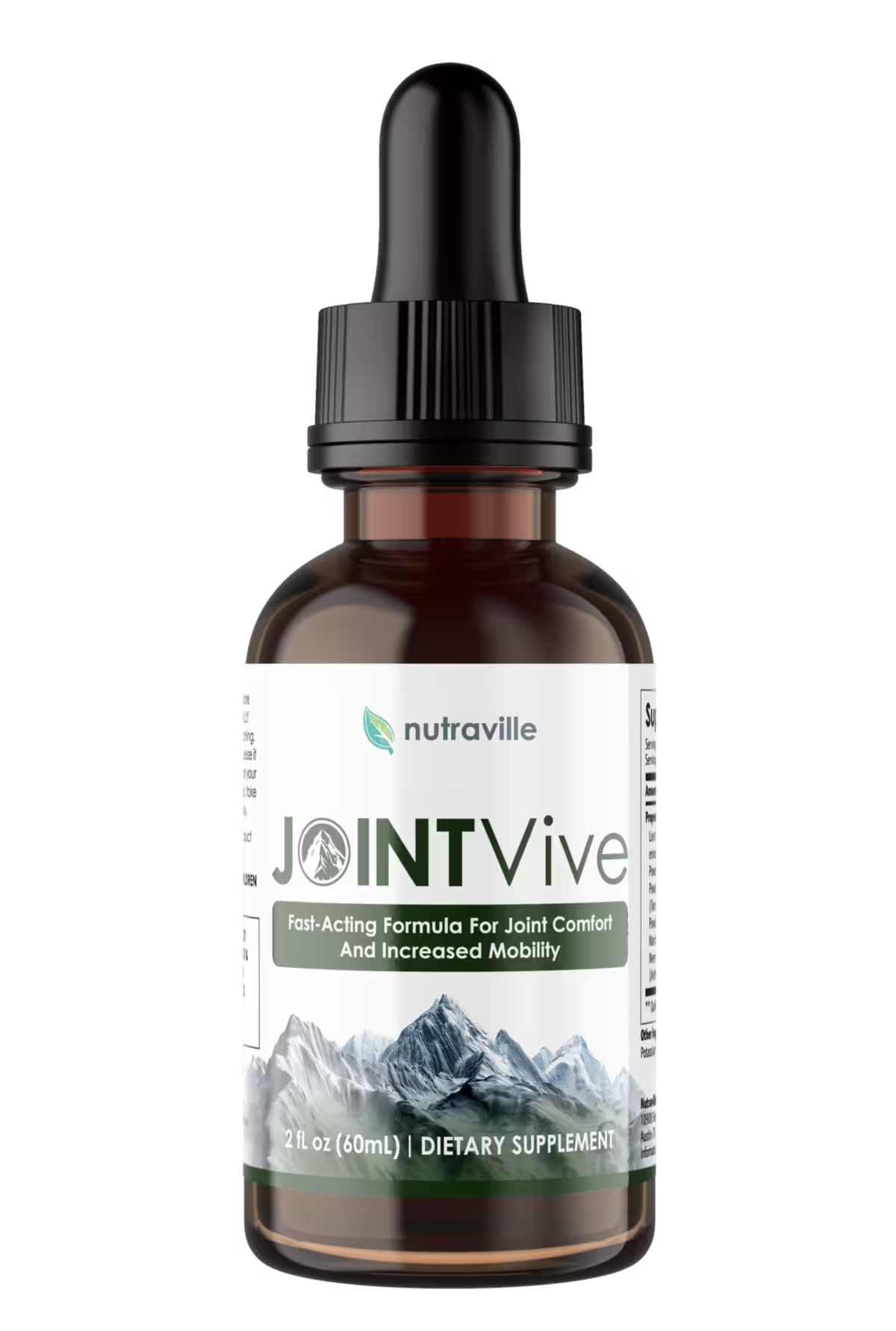
With so many individual ingredients showing promise, the question becomes: how do you get them all efficiently? This is where comprehensive formulations like
come into play.What Makes JointVive Different?
JointVive has positioned itself as a clinical-grade joint support supplement by combining multiple evidence-based ingredients at therapeutic dosages. Rather than taking five or six separate supplements, users get a synergistic formula designed to address joint health from multiple angles.
Key Features:
- Multi-pathway approach: Combines glucosamine, chondroitin, and anti-inflammatory botanicals
- Enhanced absorption: Uses bioavailable forms of each ingredient
- Quality manufacturing: Produced in GMP-certified facilities in the USA
- Transparent labeling: Full disclosure of ingredient amounts (no proprietary blends hiding dosages)
What Users Report:
Based on compiled user feedback and reviews, common experiences include:
- Noticeable reduction in morning stiffness within 2-3 weeks
- Improved mobility during daily activities
- Reduced reliance on over-the-counter pain relievers
- Better exercise tolerance
Important Considerations:
Like any supplement, JointVive isn’t a magic bullet. Individual results vary, and optimal benefits typically require consistent use for 8-12 weeks. It works best as part of a comprehensive approach that includes appropriate exercise and a healthy diet.
The Bottom Line: For those seeking a convenient, research-backed joint supplement,
, allowing you to evaluate its effectiveness for your specific situation without financial risk.Other Top-Rated Joint Supplements Compared
To help you make an informed decision, here’s how the main arthritis supplement approaches compare:
| Approach | Primary Benefits | Pros | Cons | Best For |
|---|---|---|---|---|
| Glucosamine + Chondroitin | Cartilage support, pain reduction | Well-researched, generally safe | Takes 8-12 weeks for full effect, derived from shellfish (allergy concern) | Osteoarthritis, especially knee OA |
| Curcumin (Turmeric) | Anti-inflammatory, antioxidant | Comparable to ibuprofen in studies, natural | Poor absorption without enhancers, may interact with blood thinners | OA and RA, those seeking natural NSAID alternatives |
| Omega-3 Fish Oil | Reduces inflammation, supports overall health | Strong evidence for RA, cardiovascular benefits | Fishy aftertaste, requires high doses, quality varies | Rheumatoid arthritis, general inflammation |
| Boswellia | Pain relief, anti-inflammatory | Fast-acting for some users, well-tolerated | Less research than glucosamine, quality inconsistent | OA, especially combined with other supplements |
| Collagen Peptides | Supports cartilage structure | Easy to incorporate (powders), skin benefits too | Newer research, optimal dosing still being established | Mild OA, preventive care |
| Comprehensive Formulas (e.g., JointVive) | Multi-pathway support | Convenience, synergistic effects, therapeutic dosages | Higher cost than single ingredients | Those wanting a complete solution |
Single Ingredients vs. Combination Formulas
When to Choose Single Ingredients:
- You’ve identified one specific ingredient that works for you
- You need to adjust dosages individually
- Budget constraints limit your options
- You have allergies requiring careful ingredient selection
When to Choose Combination Formulas:
- You want convenience and comprehensive support
- You’re new to joint supplements and want to cover multiple bases
- You prefer fewer pills in your daily routine
- You want synergistic benefits from multiple compounds
New Arthritis Treatment Approaches in 2026
The arthritis treatment landscape continues to evolve. Here are some exciting developments making headlines in 2026:
Personalized Supplement Protocols
Advances in biomarker testing now allow for more personalized approaches. Some healthcare providers offer inflammatory panel testing to identify which pathways are most active in your specific case, allowing for targeted supplement selection.
Enhanced Bioavailability Technologies
New delivery systems—including liposomal encapsulation, nanoparticle formulations, and patented absorption enhancers—are dramatically improving how well your body absorbs key nutrients like curcumin and boswellia.
Gut-Joint Axis Research
Emerging research highlights the connection between gut health and joint inflammation. Probiotic strains specifically selected for anti-inflammatory properties are being studied as adjunct treatments for rheumatoid arthritis, with promising early results.
Combination Therapy Acceptance
Medical professionals increasingly recognize that combining conventional treatments with evidence-based supplements can improve outcomes. The integrative medicine approach—once considered fringe—is now mainstream.
Regenerative Therapies
While still primarily in clinical settings, platelet-rich plasma (PRP) and stem cell therapies are becoming more accessible. Some patients are combining these treatments with high-quality supplements to optimize results.
How to Choose the Best Arthritis Supplement for Your Needs
With so many options available, selecting the right supplement can feel overwhelming. Use this framework to narrow down your choices:
Step 1: Identify Your Primary Concern
- Pain relief: Prioritize curcumin and boswellia
- Cartilage support: Focus on glucosamine, chondroitin, and collagen
- Inflammation reduction: Emphasize omega-3s and curcumin
- Overall joint health: Consider comprehensive formulas like JointVive
Step 2: Consider Your Type of Arthritis
- Osteoarthritis: Glucosamine/chondroitin combinations have the strongest evidence
- Rheumatoid arthritis: Omega-3s and curcumin may be more appropriate
Step 3: Evaluate Quality Markers
Look for supplements that meet these criteria:
- Third-party testing: USP, NSF, or ConsumerLab verification
- GMP certification: Ensures consistent manufacturing standards
- Transparent labeling: Exact amounts of each ingredient listed
- Bioavailable forms: Enhanced absorption versions of key ingredients
- Appropriate dosages: Amounts that match clinical research
Step 4: Check for Interactions
Always consult your healthcare provider before starting supplements, especially if you:
- Take blood thinners (curcumin and omega-3s can have mild blood-thinning effects)
- Have diabetes (glucosamine may affect blood sugar in some individuals)
- Are scheduled for surgery (stop anti-inflammatory supplements at least two weeks prior)
- Take prescription medications for arthritis
Step 5: Set Realistic Expectations
Supplements work gradually. Most require consistent use for 8-12 weeks before full benefits become apparent. Keep a simple journal tracking your pain levels, stiffness, and function to objectively assess whether a supplement is helping.
Lifestyle Changes That Enhance Treatment Effectiveness
Even the best supplement won’t reach its full potential without supportive lifestyle habits. Research consistently shows that these modifications can significantly impact arthritis outcomes:
Movement and Exercise
It might seem counterintuitive when your joints hurt, but appropriate exercise is one of the most effective treatments for arthritis. The NIH recommends:
- Low-impact aerobic activity: Walking, swimming, or cycling for 150 minutes weekly
- Strength training: Building muscle around joints provides crucial support
- Flexibility work: Gentle stretching and yoga maintain range of motion
- Balance exercises: Particularly important for preventing falls as we age
Pro tip: Water aerobics and pool exercises are especially beneficial—the buoyancy reduces joint stress while providing resistance for muscle strengthening.
Anti-Inflammatory Diet
What you eat directly impacts inflammation levels. Consider:
- Increase: Fatty fish, leafy greens, berries, nuts, olive oil, and colorful vegetables
- Decrease: Processed foods, refined sugars, excessive alcohol, and fried foods
- Consider: The Mediterranean diet pattern, which has demonstrated anti-inflammatory effects in multiple studies
Weight Management
Every pound of body weight puts approximately four pounds of pressure on your knees. Even modest weight loss—10 to 15 pounds—can meaningfully reduce joint stress and pain levels.
Sleep Quality
Poor sleep increases inflammation and reduces pain tolerance. Prioritize 7-9 hours nightly and address sleep issues like apnea that might be affecting your rest.
Stress Management
Chronic stress elevates inflammatory markers. Practices like meditation, deep breathing, and gentle yoga can help manage stress while also benefiting joint flexibility.
Heat and Cold Therapy
- Heat: Before activity, heat loosens stiff joints and muscles
- Cold: After activity or during flare-ups, cold reduces swelling and numbs pain
Supportive Devices
Don’t hesitate to use assistive devices when needed. Jar openers, long-handled shoehorns, and ergonomic kitchen tools reduce joint strain during daily activities.
Frequently Asked Questions (FAQ)
What is the best supplement for arthritis pain relief?
The best supplement depends on your specific type of arthritis and individual response. For osteoarthritis, glucosamine combined with chondroitin has the strongest research support, with studies showing 20-30% pain reduction. For rheumatoid arthritis, omega-3 fatty acids and curcumin show the most promise. Many people find comprehensive formulas that combine multiple ingredients—like JointVive—provide the most complete support by addressing joint health from multiple angles.
How long does it take for arthritis supplements to work?
Most arthritis supplements require consistent use for 8-12 weeks before you’ll notice significant benefits. Unlike NSAIDs, which provide rapid relief, natural supplements work by supporting underlying joint health and reducing chronic inflammation gradually. Some people notice initial improvements in morning stiffness within 2-3 weeks, while maximum benefits typically occur around the three-month mark. Patience and consistency are key.
Can I take joint supplements with my prescription arthritis medication?
In many cases, yes—but you should always consult your healthcare provider first. Most joint supplements like glucosamine and chondroitin don’t interact with common arthritis medications. However, curcumin and omega-3s have mild blood-thinning properties that could potentially interact with anticoagulants. Your doctor can advise whether supplements are appropriate alongside your current treatment plan and monitor for any interactions.
Are there any side effects from taking arthritis supplements?
Arthritis supplements are generally well-tolerated, but some people experience mild side effects. Glucosamine may cause digestive upset in some users, particularly those with shellfish allergies (though most glucosamine is highly purified). Fish oil can cause fishy burps or mild digestive issues. Curcumin may cause stomach upset if taken in very high doses. Starting with lower doses and taking supplements with food usually minimizes these issues. Serious side effects are rare but report any concerning symptoms to your healthcare provider.
Is glucosamine or turmeric better for arthritis?
Both have strong evidence supporting their use, but they work differently. Glucosamine primarily supports cartilage health and is best suited for osteoarthritis, particularly knee OA. Turmeric (curcumin) works as an anti-inflammatory and has shown benefits for both osteoarthritis and rheumatoid arthritis, with studies demonstrating effects comparable to ibuprofen. Because they work through different mechanisms, many experts recommend combining them for synergistic benefits. Comprehensive supplements often include both for this reason.
Take Control of Your Joint Health Today
Living with arthritis doesn’t mean resigning yourself to a life limited by pain and stiffness. While there’s no cure for arthritis, the right combination of evidence-based treatments, quality supplements, and lifestyle modifications can dramatically improve your quality of life.
The research is clear: natural supplements like glucosamine, chondroitin, curcumin, and omega-3 fatty acids offer genuine benefits for many arthritis sufferers. They’re not miracle cures, but they are valuable tools in your joint health toolkit—especially when you’re concerned about the long-term effects of conventional medications.
If you’re ready to try a comprehensive, research-backed approach to joint support, . This generous guarantee allows you to experience the benefits for yourself without financial risk. Given that most supplements require 8-12 weeks for optimal results, this timeline gives you adequate opportunity to fairly evaluate whether it works for your body.
Remember: the best time to start supporting your joint health was yesterday. The second best time is today.