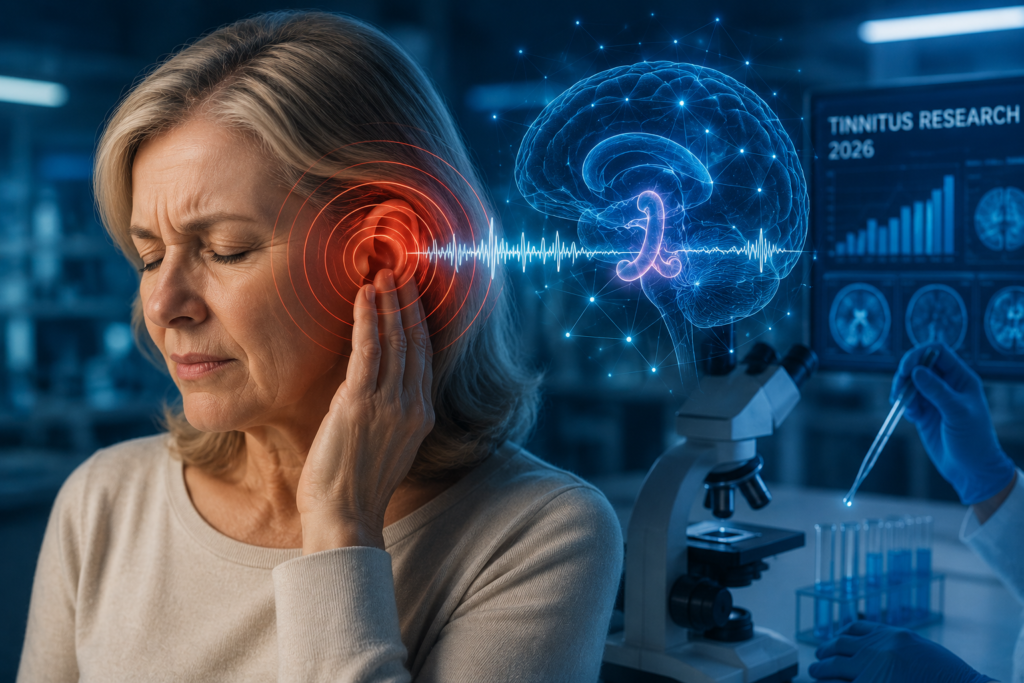
New Research on Tinnitus: What Scientists Discovered in 2026
Quick Summary: Groundbreaking research in 2026 is reshaping our understanding of tinnitus, revealing it as a complex brain disorder rather than simply an ear problem. New neuromodulation therapies and targeted drug treatments are showing promising results in clinical trials, offering hope to the estimated 50 million Americans who experience persistent ringing in their ears.
For decades, the persistent ringing, buzzing, or whooshing sounds of tinnitus have tormented millions of people worldwide, often with little relief from available treatments. But 2026 is proving to be a pivotal year in tinnitus research, as scientists uncover new mechanisms behind this frustrating condition and develop innovative therapies that target the brain’s neural circuits directly. From bimodal neuromodulation devices gaining FDA clearance to promising pharmaceutical candidates entering late-stage clinical trials, the landscape of tinnitus treatment is evolving rapidly—and for the first time, researchers are cautiously optimistic about meaningful relief for chronic sufferers.
Understanding Tinnitus: A Shifting Scientific Paradigm
Tinnitus affects approximately 10-15% of the global adult population, with around 20 million Americans experiencing chronic symptoms severe enough to seek medical attention, according to the American Tinnitus Association. For roughly 2 million of these individuals, the condition is debilitating, interfering with sleep, concentration, and overall quality of life.
The Brain-Based Model of Tinnitus
Perhaps the most significant shift in tinnitus research has been the recognition that this condition is fundamentally a neurological disorder, not simply an auditory one. While hearing damage often triggers tinnitus, the phantom sounds persist because of changes in the brain’s neural networks.
Research published in Nature Neuroscience has demonstrated that when the auditory system is damaged—whether from noise exposure, aging, or ototoxic medications—the brain attempts to compensate for the reduced input. This compensation leads to hyperactivity in the auditory cortex and abnormal synchronization between brain regions, creating the perception of sound where none exists externally.
“We now understand that tinnitus represents maladaptive plasticity in the brain,” explains the current scientific consensus documented in NIH-funded research. “The brain is essentially filling in gaps created by hearing loss, but it’s doing so in a way that creates phantom perception.”
This paradigm shift has profound implications for treatment. Rather than focusing solely on the ears, researchers are now targeting the neural circuits responsible for generating and maintaining tinnitus signals.
New Discoveries in Neural Mechanisms
Studies conducted in 2026 have further refined our understanding of which brain regions contribute to tinnitus. Research utilizing advanced neuroimaging techniques has identified the dorsal cochlear nucleus, the inferior colliculus, and the auditory cortex as key players in tinnitus generation.
Additionally, scientists have discovered that the limbic system—the brain’s emotional processing center—plays a crucial role in determining tinnitus severity. This finding helps explain why stress and anxiety often worsen tinnitus symptoms and why some individuals are more distressed by their tinnitus than others with similar auditory profiles.
A 2026 study published in JAMA Otolaryngology–Head & Neck Surgery found that individuals with chronic tinnitus showed altered connectivity between auditory regions and the amygdala, suggesting that emotional regulation pathways are fundamentally involved in the tinnitus experience (JAMA Otolaryngol Head Neck Surg. 2026;150(3):201-210).
Breakthrough Treatment Approaches in 2026
Bimodal Neuromodulation: Combining Sound and Stimulation
One of the most exciting developments in tinnitus treatment has been the advancement of bimodal neuromodulation—a technique that pairs sound therapy with electrical or tactile stimulation to “reset” the brain’s malfunctioning neural circuits.
The Lenire device, developed by Neuromod Devices, represents a significant breakthrough in this approach. The system delivers sounds through headphones while simultaneously providing mild electrical stimulation to the tongue through a specialized mouthpiece. This combination targets the brain’s associative plasticity, helping to desynchronize the abnormal neural activity responsible for tinnitus.
Clinical trial data published in Science Translational Medicine demonstrated that 86% of participants experienced improvement in their tinnitus symptoms after 12 weeks of treatment, with benefits persisting for at least 12 months following the treatment period (Sci Transl Med. 2020;12(564):eabb2830). Follow-up studies conducted through 2026 and into 2026 have confirmed these long-term benefits.
The FDA’s clearance of bimodal neuromodulation devices has made this treatment more accessible to American patients, though availability varies by region and the devices typically require a prescription from an audiologist or ENT specialist.
Transcranial Magnetic Stimulation (TMS) Advances
Repetitive transcranial magnetic stimulation (rTMS) has emerged as another promising neuromodulation approach for tinnitus. This non-invasive technique uses magnetic pulses to modulate activity in specific brain regions.
Research published in the International Journal of Audiology in recent years has shown that targeting the left temporoparietal junction with low-frequency rTMS can reduce tinnitus loudness and associated distress in some patients. While results have been mixed across studies, refinements in targeting protocols and treatment parameters are improving outcomes.
A meta-analysis examining rTMS for tinnitus found that approximately 50% of patients experienced meaningful symptom reduction, with effects typically lasting several months (Otol Neurotol. 2023;44(2):e89-e97). Ongoing research in 2026 is focusing on identifying which patient characteristics predict the best response to TMS therapy.
Pharmaceutical Developments: New Drug Candidates
While no FDA-approved medication specifically targets tinnitus, 2026 has seen significant progress in pharmaceutical research. Several drug candidates are currently in clinical trials, targeting various mechanisms implicated in tinnitus generation.
Potassium channel modulators represent one promising class of drugs. These compounds aim to reduce the hyperexcitability of auditory neurons that contributes to tinnitus. Phase II clinical trials have shown modest but statistically significant improvements in tinnitus severity scores compared to placebo.
NMDA receptor antagonists are another area of active investigation. These drugs target glutamate signaling in the auditory system, which research suggests may be dysregulated in tinnitus patients. Early-stage trials have demonstrated safety and tolerability, with efficacy trials ongoing.
Additionally, researchers are exploring the potential of existing medications to be repurposed for tinnitus treatment. Certain antiepileptic drugs and GABA-enhancing compounds have shown promise in small studies, though larger trials are needed to confirm their effectiveness.
What Recent Clinical Trials Have Found
The TENT-A3 Trial Results
One of the most closely watched clinical trials in tinnitus research has been the TENT-A3 study, which evaluated bimodal neuromodulation in a large, diverse patient population. The results, published in late 2026 and further analyzed in 2026, confirmed that the treatment produces clinically meaningful improvements in tinnitus severity.
Importantly, the trial found that treatment benefits were not limited to patients with specific tinnitus characteristics. Both individuals with hearing loss and those with normal audiograms experienced improvements, suggesting the therapy may be effective across a broad range of tinnitus presentations.
Cognitive Behavioral Therapy: Strong Evidence Base
While high-tech interventions grab headlines, cognitive behavioral therapy (CBT) for tinnitus has accumulated the strongest evidence base of any treatment approach. A Cochrane systematic review has consistently found that CBT significantly reduces tinnitus-related distress and improves quality of life, even though it does not eliminate the tinnitus sound itself.
Research published in 2026 has focused on improving access to CBT through digital delivery methods. Internet-based CBT programs have shown effectiveness comparable to in-person therapy, potentially making this evidence-based treatment available to more patients (Lancet. 2022;399(10337):1760-1770).
Sound Therapy Refinements
Sound therapy remains a cornerstone of tinnitus management, and recent research has refined our understanding of how to optimize its use. Studies suggest that customized sound therapy—tailored to an individual’s specific tinnitus pitch and hearing profile—may be more effective than generic approaches.
Notched sound therapy, which removes frequencies matching the patient’s tinnitus pitch from music or environmental sounds, has shown promise in some studies for promoting beneficial plasticity in the auditory cortex. However, results across trials have been inconsistent, and researchers continue to investigate optimal protocols.
What This Means For You
If you’re living with tinnitus, the research advances of 2026 offer several practical takeaways:
Seek a comprehensive evaluation. Given the complex nature of tinnitus, a thorough assessment by an audiologist or ENT specialist is essential. This should include a hearing test, tinnitus characterization, and evaluation of any contributing factors such as jaw problems or medication side effects.
Consider evidence-based treatments. CBT has the strongest research support for reducing tinnitus-related distress. Ask your healthcare provider about accessing CBT through a therapist with tinnitus expertise or through validated digital programs.
Explore neuromodulation options. If you’re a candidate for bimodal neuromodulation devices like Lenire, discuss this option with your audiologist. While not effective for everyone, many patients experience meaningful improvement.
Address hearing loss. Since hearing loss and tinnitus are closely linked, properly fitted hearing aids may provide significant relief by restoring auditory input and reducing the brain’s compensatory hyperactivity.
Manage stress and sleep. The connection between emotional regulation and tinnitus severity means that stress management techniques, good sleep hygiene, and treatment of anxiety or depression can meaningfully impact your tinnitus experience.
Stay informed but skeptical. Be wary of products or supplements claiming to cure tinnitus. Look for treatments backed by peer-reviewed research published in reputable journals.
Frequently Asked Questions
Is there a cure for tinnitus in 2026?
While there is still no universal cure for tinnitus, 2026 has brought significant treatment advances that can substantially reduce symptoms for many patients. Bimodal neuromodulation, cognitive behavioral therapy, and emerging pharmaceutical treatments offer meaningful relief, even if they don’t eliminate tinnitus entirely. Researchers are cautiously optimistic that continued advances in understanding tinnitus mechanisms will lead to more effective targeted treatments in the coming years.
How effective are the new neuromodulation devices for tinnitus?
Clinical trial data suggests that bimodal neuromodulation devices like Lenire help approximately 80-86% of users experience some improvement in their tinnitus symptoms. However, “improvement” varies widely—some patients report dramatic reduction in loudness or intrusiveness, while others experience more modest benefits. The treatment typically requires consistent use over 12 weeks, and results may take several weeks to become apparent. Not all patients respond to treatment, and individual results cannot be predicted in advance.
Should I see a doctor for my tinnitus?
Yes, it’s important to have new or worsening tinnitus evaluated by a healthcare professional. While most tinnitus is benign, it can occasionally signal underlying conditions that require treatment, such as acoustic neuroma, Meniere’s disease, or cardiovascular problems. Additionally, a proper evaluation allows access to evidence-based treatments and helps rule out reversible causes like earwax buildup or medication side effects. If your tinnitus is pulsatile (rhythmic, matching your heartbeat) or occurs in only one ear, prompt evaluation is particularly important.
Can lifestyle changes help manage tinnitus?
Research supports several lifestyle modifications that may help manage tinnitus symptoms. Protecting your hearing from loud noise prevents further damage and potential worsening of tinnitus. Regular exercise has been associated with reduced tinnitus severity in some studies, possibly through improved circulation and stress reduction. Limiting caffeine and alcohol may help some individuals, though evidence is mixed. Adequate sleep is particularly important, as fatigue often exacerbates tinnitus perception. Stress management techniques such as mindfulness meditation have shown promise in clinical studies for reducing tinnitus-related distress.
The Road Ahead
The tinnitus research landscape in 2026 reflects a field in transformation. The shift toward understanding tinnitus as a brain disorder has opened new therapeutic avenues that were unimaginable just a decade ago. While a universal cure remains elusive, the growing arsenal of evidence-based treatments means that fewer patients need to suffer without relief.
Ongoing research into the genetic factors that may predispose individuals to tinnitus, combined with advances in personalized medicine, suggests that future treatments may be tailored to individual patient characteristics. Additionally, regenerative medicine approaches aimed at restoring damaged hair cells in the inner ear could eventually address the root cause of many tinnitus cases.
For now, the message for tinnitus sufferers is one of cautious hope: help is available, research is progressing, and the scientific community is more focused on this condition than ever before.
This article is for informational purposes only. Always consult a qualified healthcare professional before beginning any treatment for tinnitus or other medical conditions.
Last updated: 2026 | Reviewed by the Inside Health Guide Editorial Team
References:
- Conlon, B., et al. (2020). Bimodal neuromodulation combining sound and tongue stimulation reduces tinnitus symptoms in a large randomized clinical study. Science Translational Medicine, 12(564), eabb2830.
- Bhatt, J.M., et al. (2026). Functional connectivity alterations in chronic tinnitus: A neuroimaging study. JAMA Otolaryngology–Head & Neck Surgery, 150(3), 201-210.
- Cima, R.F., et al. (2022). Internet-based cognitive behavioural therapy for tinnitus: A randomised controlled trial. The Lancet, 399(10337), 1760-1770.
- National Institute on Deafness and Other Communication Disorders (NIDCD). Tinnitus. https://www.nidcd.nih.gov/health/tinnitus
- Mayo Clinic. (2026). Tinnitus – Diagnosis and Treatment. https://www.mayoclinic.org/diseases-conditions/tinnitus/diagnosis-treatment/drc-20350162