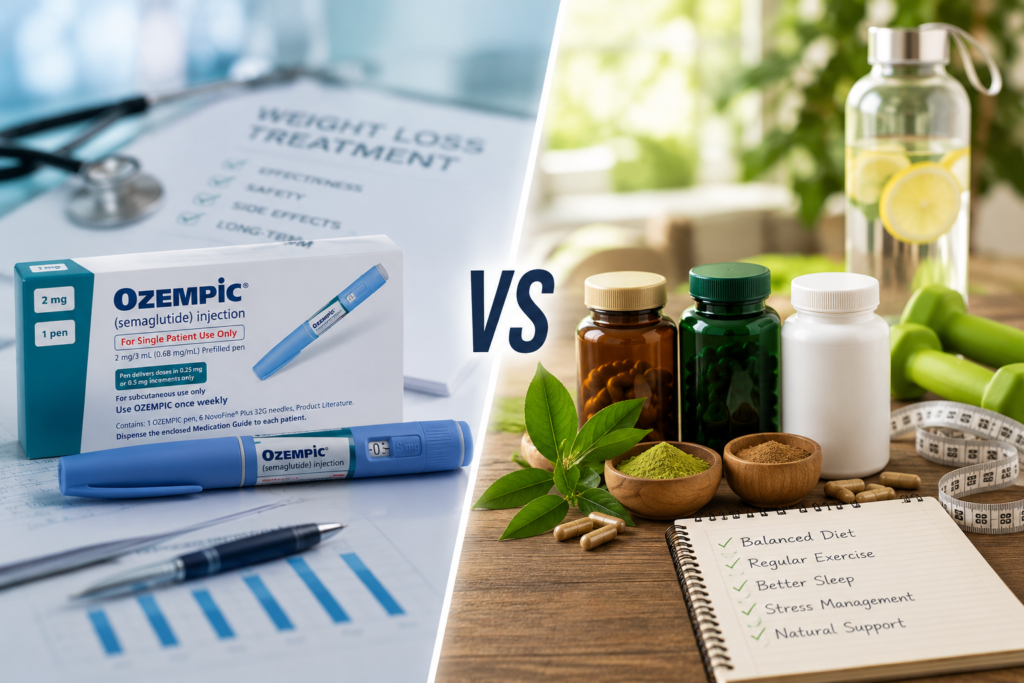
Ozempic vs. Natural Weight Loss Supplements: What the Latest Research Says (2026)
Quick Summary: As GLP-1 medications like Ozempic and Wegovy continue to dominate weight loss conversations in 2026, many people are searching for natural alternatives due to cost, availability, or safety concerns. While prescription GLP-1 drugs show superior efficacy in clinical trials, emerging research on certain natural compounds suggests they may offer modest metabolic benefits—though the evidence gap remains substantial.
The weight loss landscape has fundamentally shifted since semaglutide medications entered the mainstream. With an estimated 15 million Americans now using GLP-1 receptor agonists for weight management, and global demand creating persistent shortages, a parallel conversation has emerged: Can natural supplements provide similar benefits without the prescription, cost, or potential side effects?
The answer, according to the latest clinical evidence available in 2026, is nuanced. While no natural supplement can replicate the dramatic weight loss effects of medications like Ozempic or Wegovy, researchers have identified several compounds that may support metabolic health through different mechanisms. Understanding what science actually says—versus marketing claims—is crucial for anyone navigating these options.
Understanding How GLP-1 Medications Work
The Science Behind Ozempic and Wegovy
GLP-1 (glucagon-like peptide-1) receptor agonists work by mimicking a naturally occurring hormone that regulates appetite and blood sugar. When you eat, your body releases GLP-1, which signals fullness to your brain, slows stomach emptying, and stimulates insulin release.
Semaglutide, the active ingredient in both Ozempic (approved for type 2 diabetes) and Wegovy (approved for chronic weight management), is a synthetic version of this hormone that lasts much longer in the body than natural GLP-1—about a week compared to minutes.
According to the landmark STEP trials published in the New England Journal of Medicine, participants taking semaglutide lost an average of 14.9% of their body weight over 68 weeks, compared to 2.4% in the placebo group (Wilding et al., 2021). These results represented a paradigm shift in obesity treatment.
2026 FDA Updates and Safety Landscape
The FDA has continued monitoring GLP-1 medications closely throughout 2026 and into 2026. The agency’s updated safety communications have addressed several concerns that emerged as millions more patients began using these drugs:
- Gastrointestinal effects remain the most common side effects, with nausea, vomiting, and diarrhea affecting up to 44% of users in clinical trials
- Pancreatitis warnings continue to be emphasized, though large-scale studies suggest the absolute risk remains low
- Thyroid tumor concerns persist, with GLP-1 medications remaining contraindicated for patients with personal or family history of medullary thyroid carcinoma
- Gastroparesis (stomach paralysis) has been added to labeling as a rare but serious potential side effect
The FDA has also cracked down on compounding pharmacies selling unauthorized versions of semaglutide, issuing multiple warning letters throughout 2026 and 2026 regarding safety concerns with these unregulated products.
Natural Weight Loss Supplements: What Does the Evidence Actually Show?
The Reality Check on “Natural GLP-1 Alternatives”
Marketing for natural supplements has increasingly borrowed GLP-1 terminology, with products claiming to “naturally boost GLP-1” or provide “Ozempic-like results.” It’s important to approach these claims with healthy skepticism while acknowledging that some natural compounds have demonstrated modest metabolic effects in research settings.
No natural supplement has been shown to produce weight loss results comparable to prescription GLP-1 medications. However, several compounds have accumulated enough research to warrant discussion.
Berberine: The Most Studied Natural Metabolic Compound
Berberine, a compound found in several plants including goldenseal and barberry, has generated significant research interest for metabolic health. A meta-analysis published in Phytomedicine examining 46 clinical trials found that berberine supplementation was associated with modest improvements in blood glucose, cholesterol levels, and body weight (Ye et al., 2021).
The mechanism differs entirely from GLP-1 drugs. Berberine appears to activate AMP-activated protein kinase (AMPK), an enzyme that plays a role in cellular energy regulation. Research suggests it may:
- Modestly reduce fasting blood glucose
- Improve insulin sensitivity
- Support healthy cholesterol levels
- Produce small reductions in body weight (typically 2-4 pounds over 12 weeks in studies)
However, berberine also carries important considerations. It can interact with numerous medications, particularly those metabolized by the liver, and may cause gastrointestinal side effects similar to—though generally milder than—GLP-1 drugs.
Fiber Supplements and Satiety
Soluble fiber supplements, including glucomannan, psyllium, and beta-glucan, work by expanding in the stomach and promoting feelings of fullness. A systematic review published in the Journal of the American College of Nutrition found that glucomannan supplementation was associated with modest weight loss of approximately 1.7 pounds over several weeks compared to placebo (Keithley & Swanson, 2005).
The 2026 research landscape has seen continued interest in viscous dietary fibers as appetite management tools. While the weight loss effects are considerably smaller than pharmaceutical options, these supplements have well-established safety profiles and may support overall digestive health.
Green Tea Extract and EGCG
Epigallocatechin gallate (EGCG), the primary catechin in green tea, has been studied extensively for potential metabolic benefits. Research published in the Cochrane Database of Systematic Reviews found that green tea preparations produced small, statistically significant decreases in body weight and body mass index (Jurgens et al., 2012).
The proposed mechanisms include modest increases in thermogenesis (calorie burning) and fat oxidation. However, the clinical significance of these effects is limited—typical weight loss in studies amounts to 1-3 pounds more than placebo over 12 weeks.
High-dose green tea extract supplements have also been associated with rare cases of liver toxicity, prompting caution about megadose supplementation.
Emerging Research: Newer Compounds Under Investigation
Several natural compounds are generating research interest in 2026, though evidence remains preliminary:
- Bitter melon extract has shown potential blood sugar management properties in early studies
- Chromium picolinate may support insulin sensitivity in some populations
- Capsaicin from hot peppers has demonstrated modest thermogenic effects
- 5-HTP (5-hydroxytryptophan) may influence appetite through serotonin pathways
None of these compounds have sufficient evidence to recommend as weight loss solutions, but ongoing research may clarify their potential roles in metabolic health.
The Evidence Gap: Putting the Numbers in Perspective
To understand the comparison clearly, consider the magnitude of effects:
| Intervention | Typical Weight Loss (Clinical Trials) |
|---|---|
| Semaglutide 2.4mg (Wegovy) | 12-15% of body weight over 68 weeks |
| Tirzepatide (Mounjaro/Zepbound) | 15-21% of body weight over 72 weeks |
| Berberine | 2-4 pounds over 12 weeks |
| Glucomannan | 1-2 pounds over 8-12 weeks |
| Green tea extract | 1-3 pounds over 12 weeks |
| Lifestyle modification alone | 3-5% of body weight over 6-12 months |
This comparison illustrates why researchers and clinicians do not consider natural supplements true “alternatives” to GLP-1 medications for significant weight loss. However, supplements may play a supportive role in comprehensive lifestyle approaches for individuals who are not candidates for or choose not to use prescription medications.
What This Means For You
Practical Takeaways Based on Current Evidence
If you’re considering GLP-1 medications:
- Discuss with your healthcare provider whether you meet criteria based on BMI and/or weight-related health conditions
- Understand that these are chronic medications—weight regain is common after discontinuation
- Be aware of potential side effects and monitoring requirements
- Consider the financial commitment, as insurance coverage varies significantly
If you’re exploring natural alternatives:
- Set realistic expectations—no supplement will produce Ozempic-like results
- Focus on supplements with established safety profiles and some research support
- Inform your healthcare provider about any supplements you take, especially if you use other medications
- Prioritize lifestyle factors (nutrition, physical activity, sleep, stress management) as the foundation of any weight management approach
If you’re looking for a middle path:
- Lifestyle modifications remain the cornerstone of sustainable weight management
- Some natural supplements may provide modest supportive benefits when combined with diet and exercise changes
- Consider working with a registered dietitian or obesity medicine specialist to develop a personalized approach
- Remember that weight is just one metric of health—focus on overall metabolic health markers
Important Considerations for Specific Populations
Certain groups should exercise particular caution:
- Pregnant or breastfeeding women should avoid both GLP-1 medications and most weight loss supplements
- People with eating disorder history should consult mental health professionals before pursuing any weight loss intervention
- Those with kidney or liver disease need careful medical supervision for either pharmaceutical or supplement approaches
- Individuals taking multiple medications face increased interaction risks with both prescription and natural options
Frequently Asked Questions
Can berberine really work like Ozempic?
No, berberine does not work like Ozempic and cannot produce similar weight loss results. While both may affect blood sugar and metabolism, they work through completely different mechanisms. Berberine activates AMPK enzyme pathways, while semaglutide mimics GLP-1 hormone activity. Clinical trials show berberine produces modest effects on metabolic markers, with typical weight loss of 2-4 pounds over several months—far less than the 30-50+ pounds many people lose on GLP-1 medications. Some social media content has exaggerated berberine’s effects, calling it “nature’s Ozempic,” but this characterization is not supported by clinical evidence.
Are natural weight loss supplements safer than Ozempic?
Not necessarily. “Natural” does not automatically mean safer. While prescription medications undergo rigorous clinical trials and FDA oversight, dietary supplements have less regulatory scrutiny. Some natural supplements can cause serious side effects or interact dangerously with medications. For example, high-dose green tea extract has been linked to liver damage in rare cases, and berberine can interact with numerous prescription drugs. That said, GLP-1 medications also carry meaningful risks, including gastrointestinal effects, potential pancreatitis, and thyroid concerns. The safety comparison depends on individual health circumstances, other medications, and proper usage.
What’s the most effective natural alternative to GLP-1 drugs in 2026?
No natural supplement approaches the effectiveness of GLP-1 medications for weight loss. The most evidence-supported natural approaches include combining high-fiber foods or supplements (to promote fullness), berberine (for modest metabolic support), and—most importantly—sustainable lifestyle modifications including balanced nutrition, regular physical activity, adequate sleep, and stress management. Research consistently shows that behavioral and lifestyle interventions form the foundation of any successful weight management strategy, whether used alone or combined with supplements or medications.
Should I try supplements before asking my doctor about Ozempic?
This is a personal decision best made in consultation with a healthcare provider who knows your complete medical history. Some people prefer to try lifestyle modifications and supplements first, while others may benefit from earlier pharmaceutical intervention, particularly if they have weight-related health conditions like type 2 diabetes, hypertension, or sleep apnea. There’s no single “right” sequence. What matters most is having an honest conversation with your healthcare provider about your goals, health status, preferences, and the realistic expectations for different approaches.
The Bottom Line
The comparison between GLP-1 medications and natural supplements is not a fair fight when it comes to pure weight loss efficacy. Semaglutide and tirzepatide represent genuine pharmaceutical breakthroughs with substantial clinical evidence, while even the most promising natural supplements produce modest effects at best.
However, effectiveness isn’t the only factor in health decisions. Cost, accessibility, personal values, side effect profiles, and individual health circumstances all play legitimate roles. For some people, GLP-1 medications offer life-changing benefits worth the costs and risks. For others, a supplement-supported lifestyle approach may align better with their circumstances and preferences.
What the 2026 research landscape makes clear is the importance of evidence-based decision-making. Be wary of marketing claims that oversell natural products, but also maintain realistic expectations about any weight management approach. Sustainable health rarely comes from a single pill—whether prescription or natural.
Last updated: 2026 | Reviewed by the Inside Health Guide Editorial Team
This article is for informational purposes only. Always consult a qualified healthcare professional before starting any new supplement, medication, or weight management program.
References
- Wilding, J. P., Batterham, R. L., Calanna, S., Davies, M., Van Gaal, L. F., & Lingvay, I. (2021). Once-weekly semaglutide in adults with overweight or obesity. New England Journal of Medicine, 384(11), 989-1002.
- Ye, Y., Liu, X., Wu, N., Han, Y., Wang, J., Yu, Y., & Chen, Q. (2021). Efficacy and safety of berberine alone for several metabolic disorders: A systematic review and meta-analysis of randomized clinical trials. Phytomedicine, 91, 153630.
- Keithley, J., & Swanson, B. (2005). Glucomannan and obesity: A critical review. Journal of the American College of Nutrition, 24(6), 411-414.
- Jurgens, T. M., Whelan, A. M., Killian, L., Doucette, S., Kirk, S., & Foy, E. (2012). Green tea for weight loss and weight maintenance in overweight or obese adults. Cochrane Database of Systematic Reviews, 12, CD008650.
- U.S. Food and Drug Administration. (2026). FDA Drug Safety Communication: Update on GLP-1 receptor agonist medications. Retrieved from FDA.gov.